Nepal · Nepal guide
Restaurant inventory management in Nepal: stock and reorders
Restaurant inventory management for Nepal: count the right items, set reorder levels around supplier days, track gas cylinders and plan for festival rushes.
Looking for the global version? Read the global guide
In many restaurants in Nepal, stock lives in the owner’s head: how much flour is left for momo, whether the gas will last the weekend, when the beer crates need ordering. That works until the owner is away, or a busy night empties the storeroom. A short, regular inventory routine fixes this without turning your kitchen into an accounting office.
Start with the items that cost or run out the most
- Momo and noodle basics: maida, mince, cabbage, onion.
- Proteins: chicken, buff, mutton, eggs, paneer.
- Rice, dal, cooking oil and ghee.
- Milk, curd and tea.
- Bottled drinks: water, soft drinks and beer, counted by crate or bottle.
- LPG cylinders, counted as full, in use and empty.
Twenty to forty lines is plenty to begin. A list that fits on one screen is one your staff will actually update.
Count gas cylinders like stock
Running out of cooking gas mid-service stops the whole kitchen. Treat LPG cylinders as an inventory item with a reorder level: if you use one cylinder every two days and your dealer delivers the next day, keep at least two full cylinders in reserve. During supply shortages, raise the level and order earlier.
Set reorder levels around your supplier days
Vegetables often come daily from the market, meat may come every morning, and dry goods or drinks might arrive once a week. Set each reorder level to cover the days until the next delivery plus a buffer. For example, if you use 4 kg of chicken a day and order the evening before, a reorder level of 8 kg covers tomorrow’s service and a busy surprise.
Record items in the units you buy: kg, litre, packet, crate or cylinder. If drinks arrive by the crate, count crates and loose bottles separately rather than estimating.
Plan ahead for festivals and the tourist season
Dashain, Tihar and the peak trekking months can double sales of some items in a few days, while suppliers close or prices rise. A week before, look at last year’s busy period if you have it, raise reorder levels for your best sellers, and confirm delivery days with each supplier. After the festival, lower the levels again so money is not sitting on the shelf.
A weekly count that staff will keep doing
- Count after closing or before morning deliveries, never during service.
- Follow the same order as the list, shelf by shelf.
- Count meat, dairy and vegetables daily; dry stores weekly.
- Rotate older stock to the front so it is used first.
- Keep supplier bills together; you will need them for the food cost check.
Check your food cost each month
Food cost % = (opening stock + purchases − closing stock) ÷ food sales × 100. If you started the month with Rs 40,000 of stock, bought Rs 1,50,000, ended with Rs 30,000 and food sales were Rs 4,80,000, your food cost is Rs 1,60,000 ÷ Rs 4,80,000, about 33%. A sudden rise usually points to waste, larger portions or missing stock.
Tracking stock in GiveMyMenu
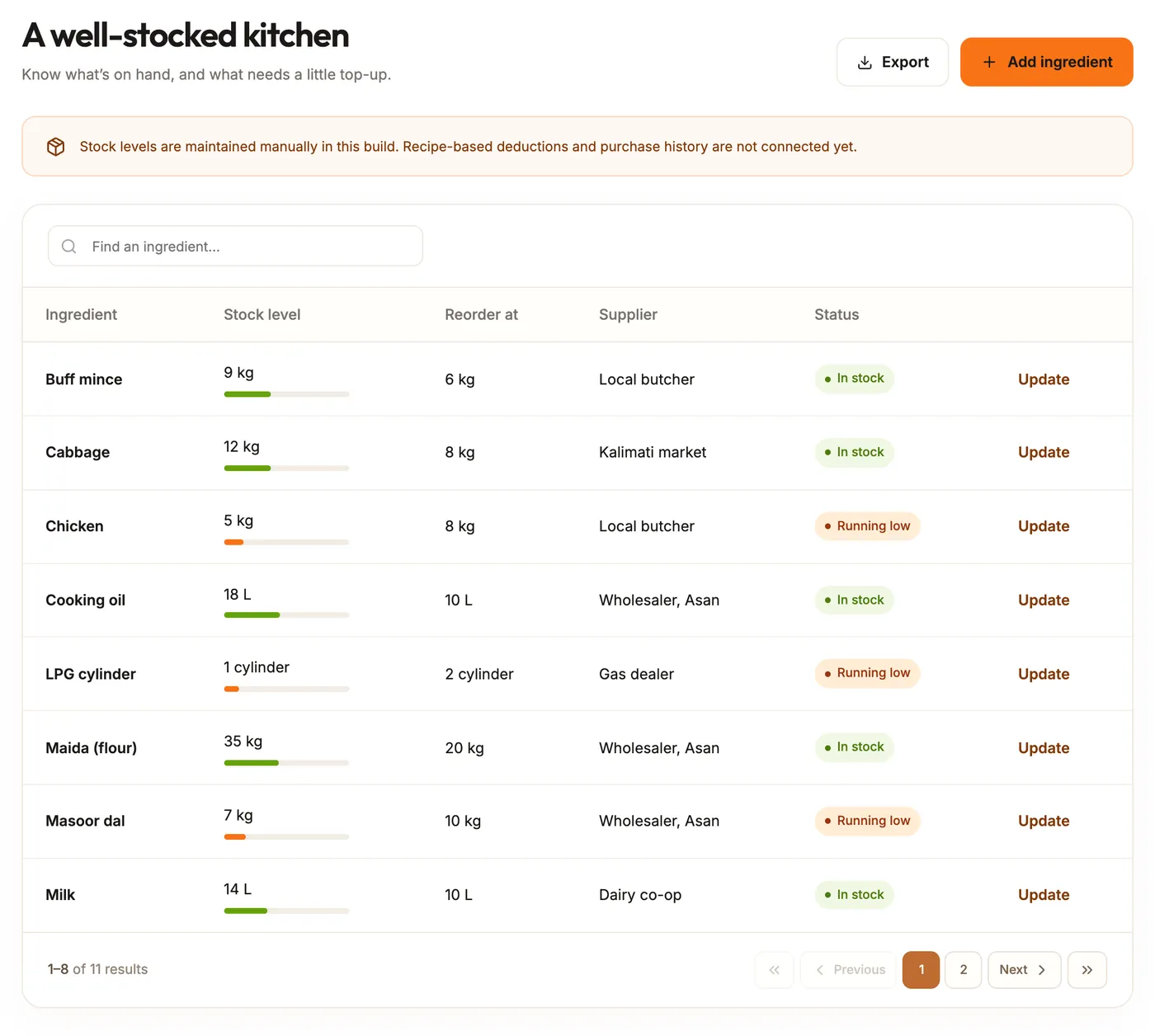
GiveMyMenu’s inventory page is included on Starter and above, and in the Pro trial for new accounts. For each ingredient you record the unit, quantity on hand, reorder level and supplier. Anything at or below its reorder level shows as running low, so the next order list is clear. You can export the list as a CSV file to share with a manager or accountant. Paid plans are priced in NPR and can be paid through eSewa or Khalti.
Stock is updated by hand after a count, a delivery or when something runs out. GiveMyMenu does not yet deduct ingredients automatically as dishes sell, and it does not record purchases or supplier bills, so keep those separately. For most small restaurants, cafes and bakeries, a reliable manual list is the right first step.
Try it with your restaurant menu
Set up a few dishes and follow an order through to the kitchen and bill.